
Concrete Pumping in San Fernando, CA
WHAT WE DO
Pumped mixes can carry coarse aggregate no larger than one-third of the smallest inside diameter of the pump line or hose under ACI 304.2R guidance, so a 3-inch hose tops out at 1-inch stone. INFINITE CONCRETE CREATIONS, INC.
handles concrete pumping in San Fernando, CA, matching a boom or line pump to the site, confirming a pumpable mix, and running hose to slabs, footings, and walls on steep or cramped lots. We are licensed and insured, holding California State License #1128122.
WHERE WE PUMP
Pours Where Trucks Cannot Reach
A ready-mix truck needs firm, level ground near the pour, and many properties here offer neither. Foothill homes in Glendale, CA, climb away from the street, terraced lots in Palos Verdes Estates, CA, drop toward the ocean, and older parcels in San Fernando, CA, tuck backyards behind garages with a gate barely wider than a wheelbarrow. Summer heat also shortens the working time of fresh concrete, which makes slow wheelbarrow runs a gamble. We plan the pump position, hose route, and truck staging before the first yard of concrete arrives.
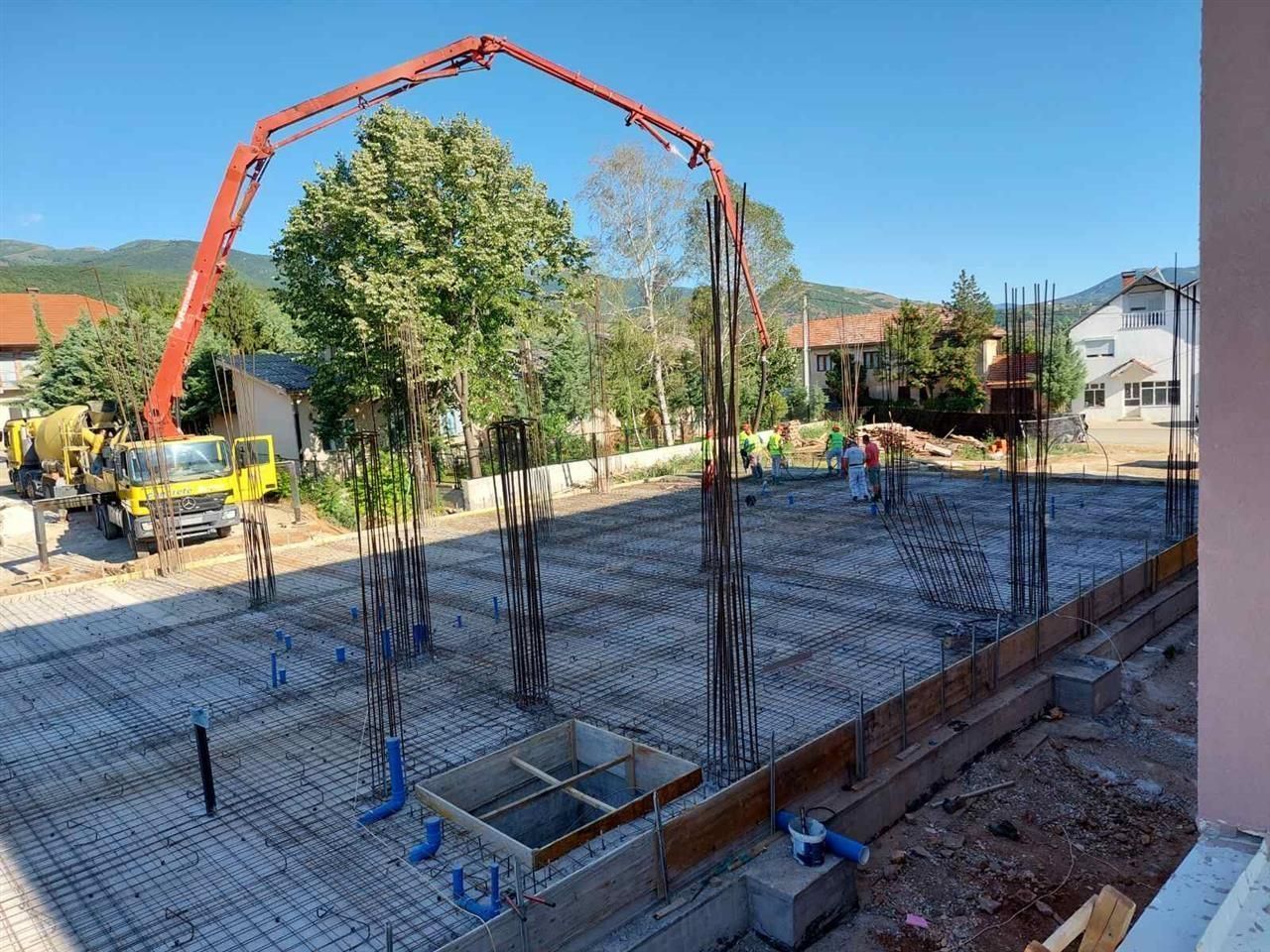
Pumping Methods and Pour-Day Steps
Pumped concrete succeeds or fails on planning, so every pour starts with the right equipment for the site, a mix built to travel through a hose, and a clear sequence from setup to cleanout.
01
Boom Pump Placement
Mounted on a truck, a boom pump unfolds a hydraulic arm that reaches over houses, walls, and landscaping to drop concrete exactly where it is needed. It sets up quickly and suits larger slabs, foundations, and pours with open space for the truck.
02
Line Pump Placement
Smaller trailer or truck-mounted line pumps push concrete through pipe and flexible hose laid along the ground. The hose can snake through gates, side yards, and down slopes, which makes it a practical fit for backyard slabs and footings tucked behind a house.
03
Pumpable Mix Coordination
Concrete has to flow through a hose without separating or plugging. We specify mixes with suitable aggregate size, sand content, and slump for the line diameter, so the pump runs steadily and the concrete keeps its strength once it is placed.
04
Pump Priming and Setup
Before the first load, the line is primed with a slurry that coats the inside of the hose and helps concrete move without sticking. Outriggers or pads rest on firm ground, and every hose connection is clamped and checked before pumping begins.
05
Hose Routing and Site Protection
Hose runs are laid out to avoid planters, new sod, and delicate hardscape, with boards or mats wherever the line crosses a finished surface. Keeping the discharge end low and close to the placement point also helps prevent the mix from segregating.
06
Washout and Cleanup
After the last section, leftover concrete is pushed out of the line and the hopper is cleaned. Washout water and residue stay in a contained area, never the gutter, and City of Los Angeles code bars concrete washout from its storm drains.
TESTIMONIALS
What Our Customers Say
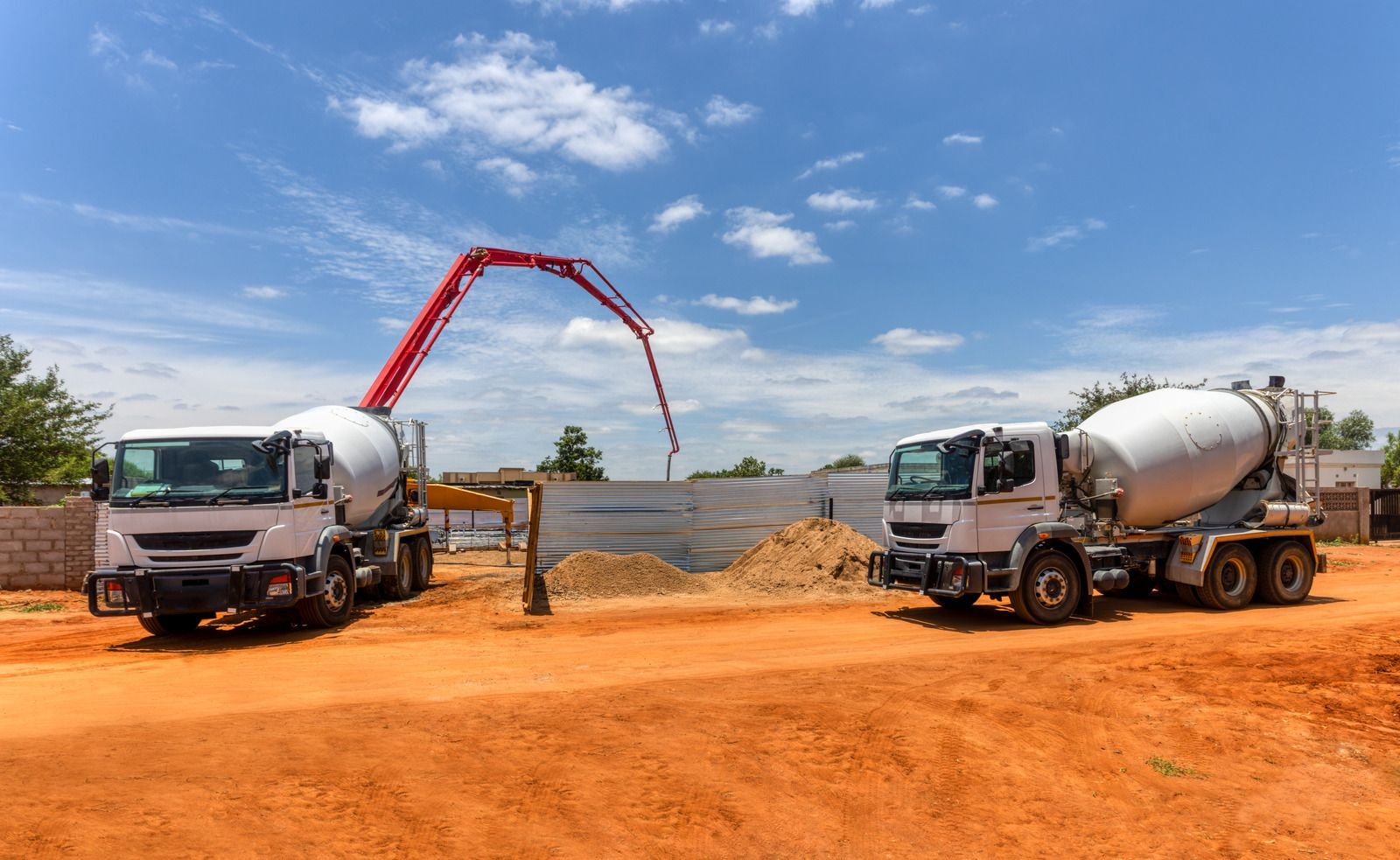
Where Pumped Concrete Makes the Biggest Difference
Pumping is not required for every job, but on sites with limited access, long distances, or large volumes, it turns a difficult pour into a controlled one and keeps the mix uniform from start to finish.
01
Backyard Slabs and Patios
When the only route to the pour runs through a side gate, a hose can carry concrete past the house without a constant parade of wheelbarrows across the lawn. Faster placement also leaves more working time for finishing, texturing, and cutting joints.
02
Footings and Trenches
Narrow footing trenches for walls, additions, and outdoor structures are hard to fill evenly from a chute. A hose lets us move along the trench and place concrete around the rebar in a controlled flow, reducing voids and spills along the edges.
03
Poured Walls
Formed concrete walls need concrete delivered from above in even lifts. A pump places material into tall forms without overloading one side, which helps keep the forms plumb and the exposed face uniform from one end of the wall to the other.
04
Hillside and Terraced Lots
Steep lots make chute and wheelbarrow delivery risky or simply impossible. Pumping lets the truck stay on the street while the hose runs up or down the slope to terraces, wall footings, and upper-level patios that no truck could ever reach.
05
Large Driveways and Commercial Slabs
Big pours have to go down quickly so every section can be finished before the concrete sets. A pump keeps several trucks unloading on a regular rhythm, which helps avoid cold joints on long driveways, parking pads, and storefront slabs.
06
Tight Urban Lots
Zero-lot-line homes, alley access, and properties with no room for a truck beside the pour all benefit from pumping. The truck parks where it can, and the hose carries concrete over fences, through garages, or across a neighbor's yard with permission.
WHO WE ARE
A Hose Reaches Where Wheelbarrows Cannot
Our family-owned team sees pumping as a way to protect the finish, not just to save labor. Concrete that lands where it belongs, without long wheelbarrow trips, stays consistent from the first section to the last, and that matters on colored and decorative work. We walk the site with you, flag access points, protect lawns and hardscape along the hose path, and share a clear pour-day timeline for residential and commercial jobs. When your project is ready to move forward, reach out through our estimate request form.
Why Choose INFINITE CONCRETE CREATIONS, INC.
Built On Trust & Craftsmanship
01
Quality Concrete Craftsmanship
We take pride in delivering durable, high-quality concrete work built with skilled craftsmanship and dependable materials. Every project is completed with long-term performance and appearance in mind.
02
Personalized Custom Designs
We tailor each project to the property and the client's vision, offering a wide variety of customizable colors, textures, patterns, and finishes. We can mix and match design elements to create concrete work that is truly unique.
03
Precision in Every Detail
We approach every project with careful planning and precise attention to detail, from preparation and forming to finishing and final cleanup. Our goal is a clean, professional result that reflects the quality of our work.
04
Experienced Certified Professionals
Our team brings extensive hands-on experience, specialized skills, and professional credentials to every project. We use proven techniques and industry knowledge to complete concrete projects safely, accurately, and professionally.
FAQs - Frequently Asked Questions
When do you need a concrete pump?
You need one when the truck cannot get close to the pour, the site sits uphill or behind a house, or the volume is too great to place by wheelbarrow before the concrete begins to set and lose workability.
What is the difference between a boom pump and a line pump?
Boom pumps use a truck-mounted hydraulic arm to place concrete from above, which suits high-volume pours and open sites. Line pumps push concrete through ground-laid hose, which works better for backyards, tight access points, and smaller residential placements.
How far can a concrete pump reach?
Reach depends on the equipment. Truck-mounted booms vary widely in arm length, while line pumps can push concrete a few hundred feet through hose on a typical residential site, depending on the mix, hose diameter, and elevation change.
Does pumped concrete need a special mix?
Yes, a pumpable mix needs well-graded aggregate no larger than one-third of the hose diameter and enough fine material to flow. INFINITE CONCRETE CREATIONS, INC. coordinates those mix details for pours in San Fernando, CA, so the concrete travels smoothly through the line.
Is pumped concrete as strong as poured concrete?
It is, as long as the mix is designed properly. Pumping is simply a delivery method, and concrete placed through a hose reaches the same design strength as chute-placed concrete, provided no extra water is added on site to force it through.
Can concrete pumping damage lawns or landscaping?
Damage is usually minimal. Line hose lies on the surface and can be routed around planting beds, while boards or mats spread the weight where it crosses turf or pavers. Boom pumps avoid the yard entirely by reaching over the house.
Can a concrete pump go up a hill?
Pumps handle uphill runs well, though every foot of rise adds pressure. INFINITE CONCRETE CREATIONS, INC. plans hose routes on sloped lots in San Fernando, CA, keeping runs as direct as possible so the flow stays steady and the mix arrives consistent.
What happens to leftover concrete after pumping?
Excess concrete is pushed out of the line into a designated washout area, and the hopper and hose are rinsed before the pump leaves. That washout water carries cement and fine solids, so it must be kept out of gutters and storm drains.
Put The Concrete Exactly Where Your Project Needs It
Hard-to-reach pours once meant dozens of wheelbarrow loads, trampled landscaping, and concrete that started stiffening before it reached the forms. Pumping changes that equation by moving the mix straight from the truck to the placement point in a continuous stream. INFINITE CONCRETE CREATIONS, INC. plans pumped pours around San Fernando, CA, and nearby hillside and urban neighborhoods, choosing the method that fits your access and volume. Talk through the site with us, ask about hose routes and truck staging, and settle on a plan at a comfortable pace. When you are ready, describe your site through our contact page, and we will schedule a walkthrough.