
Concrete Sculptures & Art Pieces in San Fernando, CA
WHAT WE DO
Glass-fiber-reinforced concrete, known as GFRC, can weigh as much as 75% less than a similar piece cast in traditional concrete while reaching flexural strength as high as 4,000 psi. INFINITE CONCRETE CREATIONS, INC.
uses that material, along with conventional mixes and steel armatures, to create concrete sculptures and art pieces in San Fernando, CA. Each commission moves from sketch to mold, casting, hand finishing, sealing, and setting, and every step reflects the decorative focus we bring as artists in concrete.
WHERE WE CAST
Arroyo Gardens, Canyon Terraces, and Summer Heat
Outdoor art here has to live through July highs near 87°F and months of bright, dry sun that can chalk an unsealed surface and fade stained color. We choose UV-stable sealers and pigments made for exterior exposure, then plan how each piece is anchored, because Southern California ground can shake. Craftsman gardens in Pasadena, CA, suit earthy relief panels and organic forms, hillside terraces in Calabasas, CA, often need lighter GFRC pieces that can be carried up a slope, and courtyards across San Fernando, CA, favor graphic modern shapes.
Art Forms We Shape in Concrete
Concrete takes almost any form a mold can hold, so our work ranges from quiet garden accents to bold statement pieces, each sized, reinforced, and finished for the place where it will be seen and touched.
01
Freestanding Garden Sculptures
Organic or stylized forms rise from planting beds, lawns, and patio corners as focal points. We size the base for stability, choose between solid casting and a hollow GFRC shell based on height, and finish the surface to complement nearby stone and foliage.
02
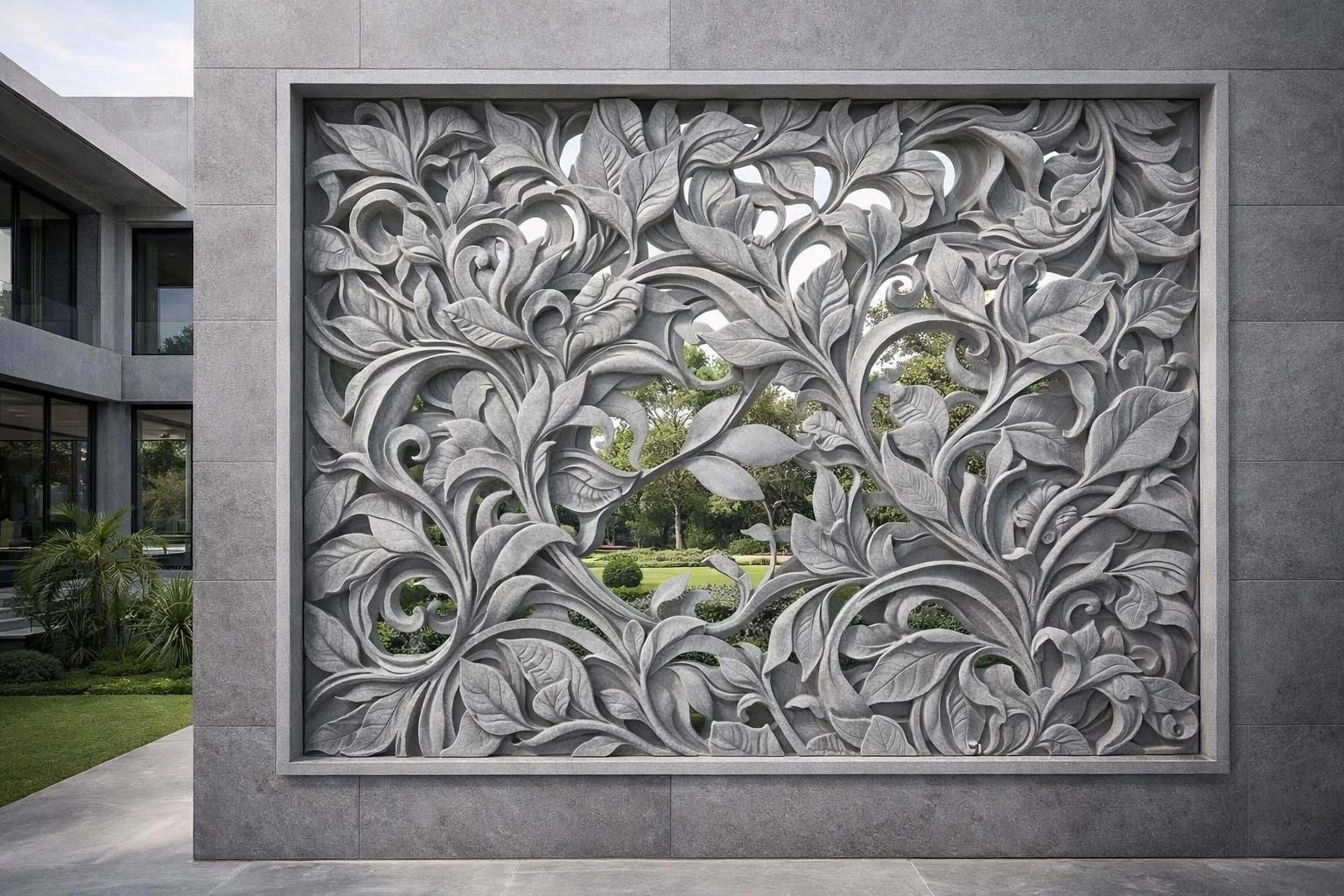
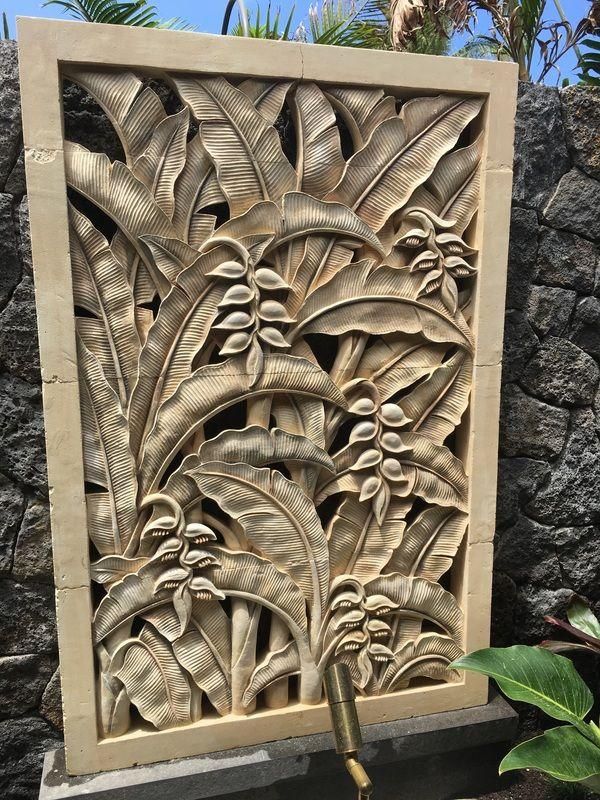
Bas-Relief Wall Panels
Botanical motifs, landscapes, or geometric patterns project slightly from a flat background and mount to garden walls, courtyard walls, or entry niches. Casting them as thin panels keeps weight manageable, and hidden anchors hold each one firmly against the supporting surface.
03
Abstract Modern Forms
Clean geometry, sweeping curves, and sharp planes suit contemporary homes and commercial spaces. Smooth, polished, or lightly sandblasted surfaces bring out the character of the mix, and exposed aggregate or embedded glass can add sparkle where light strikes the piece.
04
Figurative and Animal Pieces
People, pets, birds, and wildlife rendered in concrete add personality to a garden path or entry. Delicate features such as fur, feathers, and faces depend on a flexible mold that captures undercuts, followed by patient hand detailing after the piece comes out.
05
Mosaic and Inlaid Art
Tile fragments, sea glass, pebbles, or metal accents turn a cast piece into a colorful centerpiece. Inlays go into the mold face before casting or into a fresh surface, then get cleaned and sealed so every edge stays locked in.
06
Sculpted Faux Rock Features
Boulders, outcrops, and stacked ledges shaped from GFRC give a landscape the look of natural stone where real rock would be too heavy to place. Hand carving and layered stains recreate veins, lichen tones, and weathered edges that read as genuine.
TESTIMONIALS
What Our Customers Say
From First Sketch to Final Placement
Every piece of cast art follows the same careful path, and each stage builds on the one before it, so decisions about scale, reinforcement, and finish are settled while they are still easy and inexpensive to change.
01
Concept and Scale Model
Ideas start as sketches, photos, or reference images, which we turn into measured drawings. Larger commissions often get a clay or foam study model, letting you judge proportions, viewing angles, and surface texture before any mold work begins.
02
Mold Making
Silicone or urethane rubber captures fine detail and flexes around undercuts, while rigid shells of fiberglass or wood hold the rubber in shape. Simple geometric pieces may use melamine or foam forms that can be cut, sealed, and assembled quickly.
03
Reinforcement Planning
Compact ornaments may need only fibers in the mix, while tall or cantilevered pieces get a steel armature designed to carry the full load. GFRC shells rely on dispersed glass fibers and can include cast-in anchors for mounting.
04
Casting and Curing
Layers of concrete go into the mold, each vibrated or tapped to release trapped air that would leave pinholes. The piece then stays covered and damp while it gains strength, since slow, moist curing produces a harder surface and fewer hairline cracks.
05
Finishing and Detailing
After demolding, we dress the seams by hand, fill surface voids with matching slurry, and sharpen texture with rasps, grinders, or light sandblasting. Color then comes from acid stains, water-based dyes, or patinas that imitate bronze, iron, or weathered stone.
06
Sealing and Setting
A UV-stable sealer protects color and resists water, dirt, and staining. We then set the finished piece on a prepared footing or base, pinning taller work with stainless dowels or anchors so it stays upright through wind, curious hands, and ground movement.
WHO WE ARE
Half the Art Happens Inside the Mold
Anyone can pour concrete into a shape, but the details a viewer notices, such as crisp edges, clean undercuts, and texture that catches light, get decided long before the mix arrives. Our family-owned team spends time on drawings, scale models, and mold work, and we share each stage with you so the piece matches your vision. We take on residential gardens as well as commercial lobbies and plazas, tailoring every design to its setting. Send your idea through our contact page, and we will prepare an estimate.
Why Choose INFINITE CONCRETE CREATIONS, INC.
Built On Trust & Craftsmanship
01
Quality Concrete Craftsmanship
We take pride in delivering durable, high-quality concrete work built with skilled craftsmanship and dependable materials. Every project is completed with long-term performance and appearance in mind.
02
Personalized Custom Designs
We tailor each project to the property and the client's vision, offering a wide variety of customizable colors, textures, patterns, and finishes. We can mix and match design elements to create concrete work that is truly unique.
03
Precision in Every Detail
We approach every project with careful planning and precise attention to detail, from preparation and forming to finishing and final cleanup. Our goal is a clean, professional result that reflects the quality of our work.
04
Experienced Certified Professionals
Our team brings extensive hands-on experience, specialized skills, and professional credentials to every project. We use proven techniques and industry knowledge to complete concrete projects safely, accurately, and professionally.
FAQs - Frequently Asked Questions
Can concrete sculptures be left outside all year?
Yes, and well-made concrete handles sun, rain, and heat outdoors for a long time. A dense mix, good curing, and an exterior-grade sealer keep water and stains out, while periodic resealing protects color on pieces that sit in full sun all day.
What is GFRC and why is it used for sculpture?
GFRC is concrete reinforced with alkali-resistant glass fibers rather than steel alone. It can be as much as 75% lighter than a similar traditional casting, and its high flexural strength allows thin shells, intricate detail, and complex shapes.
How long does a concrete sculpture take to cure?
Demolding timing depends on the mix, mold, and temperature, but strength keeps building for weeks. Standard tests check strength at 28 days, and a typical mix reaches roughly 75% of that strength within the first week, so sealing waits accordingly.
What finishes can be applied to a concrete sculpture?
Options include acid stains for mottled earth tones, water-based dyes for brighter color, faux patinas that mimic bronze or copper, polishing for a glassy surface, and sandblasting for a gritty, aged texture. A sealer then locks in whichever look you choose.
How is an outdoor sculpture anchored in place?
Heavier pieces sit on a concrete footing, with stainless pins or threaded rods set into both the base and the sculpture. At INFINITE CONCRETE CREATIONS, INC., we size anchors for each piece's height and weight so installations around San Fernando, CA, stay upright.
What kind of mold is used for casting concrete art?
Flexible silicone or urethane rubber molds handle detailed, curved, or textured pieces because they peel away from undercuts. Rigid forms made of melamine, plastic, or foam work well for geometric shapes, and some one-off pieces are sculpted directly without any mold at all.
Can a concrete sculpture be made from my own drawing or photo?
Certainly. At INFINITE CONCRETE CREATIONS, INC. in San Fernando, CA, sketches, photos, and reference images become measured drawings and study models, and we refine proportions with you before building the mold, so the finished piece stays true to your idea.
What is the difference between cast and carved concrete sculpture?
Cast sculpture is formed by pouring concrete into a mold, which allows repeatable pieces and crisp detail. Carved work starts as a solid block or built-up mass that is shaped by hand while still workable, producing a single original with visible tool marks.
Turn A Blank Corner Of The Garden Into A Conversation Piece
Most yards already have the spot: the bare wall at the end of a path or the empty bed everyone walks past. A sculpture gives that space a reason to be looked at, and concrete lets the piece be as bold or as delicate as the idea behind it. INFINITE CONCRETE CREATIONS, INC. brings the same decorative eye we use on stamped and colored surfaces to cast art for homes and businesses in San Fernando, CA. Share rough sketches, inspiration photos, or simply a feeling you want the piece to carry, and we will shape the idea together at a comfortable pace. Our estimate request form is the easiest place to begin.