
Tile Installation in San Fernando, CA
WHAT WE DO
Under ANSI A137.1, tile for level interior floors walked on while wet should carry a wet DCOF of 0.42 or higher, and ramps and pool decks need more grip. INFINITE CONCRETE CREATIONS, INC.
handles tile installation in San Fernando, CA, over the concrete we know best, preparing slabs, steps, and entries with crack-isolation or waterproof membranes, then setting porcelain and natural stone in thinset with planned grout and movement joints. Our family-owned team treats every hidden layer as part of the finish.
WHERE WE SET
Sun-Baked Slabs and Ocean-Damp Mornings
Outdoor tile in the Valley lives through July afternoons near 87°F and cool January nights, and that daily swing makes tile and slab alike expand and contract. Tile Council of North America guidance calls for movement joints every 8 to 12 feet on exterior tile, with tighter spacing for dark tile in strong sun. We plan those joints for pool surrounds in Sherman Oaks, CA, entry steps in San Fernando, CA, and marine-layer patios in Santa Monica, CA, where damp mornings and salt air favor dense porcelain and sealed stone.
Tile Work We Set Over Concrete
Each tile project starts with the surface underneath it, then moves to the material, pattern, and grout that suit how the space gets used, from a sunny backyard patio to a busy commercial entry floor.
01
Porcelain Patio Tile
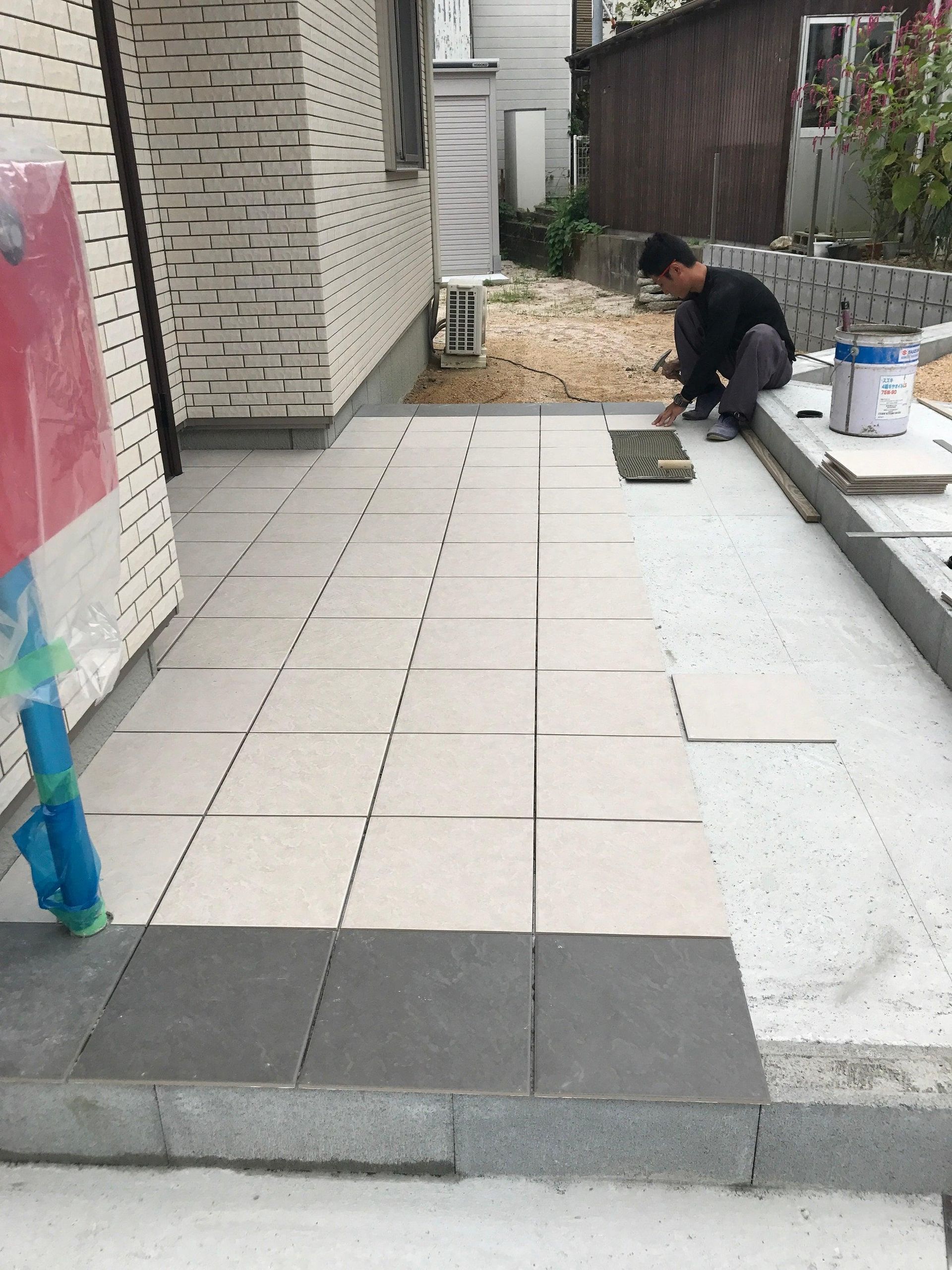
Dense porcelain absorbs 0.5% of its weight in water or less, so it shrugs off sprinklers, spills, and winter rain. We set it over a clean, flat patio slab with full mortar coverage, leaving movement joints at the perimeter and across the field.
02
Natural Stone Tile
Travertine, slate, limestone, and quartzite bring natural variation that porcelain can only imitate. Stone needs a sealer suited to its porosity, careful handling of edges, and a setting mortar that will not stain lighter stones, so we match materials to each selection.
03
Step and Stair Tile
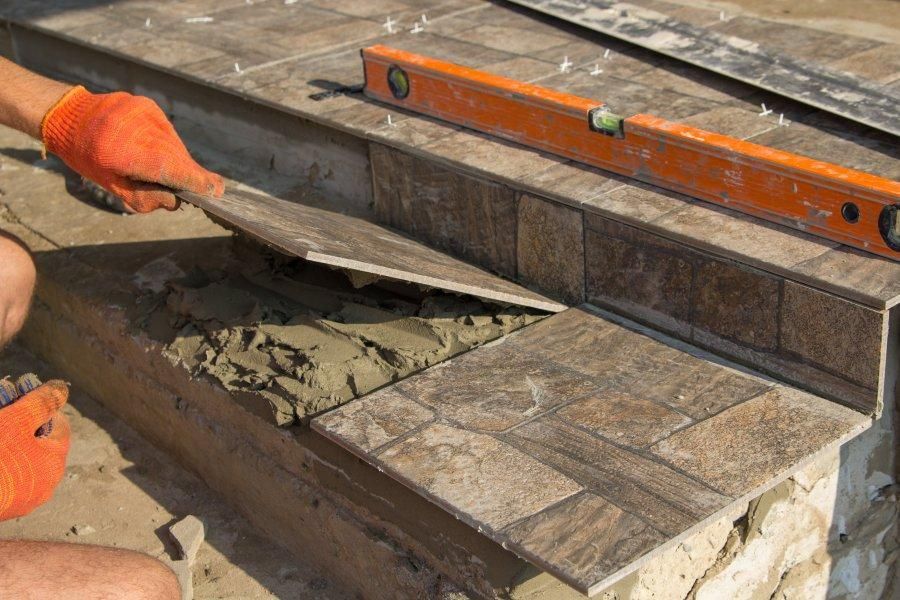
Treads, risers, and landings get tile cut to consistent dimensions so every step feels the same underfoot. Bullnose or grooved nosing pieces finish the front edge, and a textured surface on the tread helps keep wet shoes from sliding on the way down.
04
Entryway and Porch Tile
First impressions start at the front door, where tile frames the approach and handles constant foot traffic. We slope the surface slightly away from the threshold so rain drains outward, and we pick patterns that line up cleanly with the door and walls.
05
Outdoor Kitchen Tile
Counters, backsplashes, and island faces around a grill take heat, grease, and cleaning products. Porcelain and well-sealed stone handle that abuse, and we choose grout with stain resistance in mind so the cooking area stays easy to wipe down.
06
Interior Slab Floor Tile
Garage conversions, ground-floor living spaces, and commercial rooms built on concrete accept tile directly once the slab is ready. Moisture testing comes first, followed by grinding high spots, filling low areas, and adding a membrane wherever cracks or shrinkage joints cross the room.
TESTIMONIALS
What Our Customers Say
Why Choose Us for Tile Installation
Most tile failures trace back to the slab, the mortar, or the joints rather than the tile itself, so these six habits shape every installation we take on and keep the finished surface even, bonded, and safe.
01
Slab Prep Comes First
Tile will mirror every crack and bump in the concrete below. We grind ridges, patch hollows, and clean away curing compounds or old sealer so the thinset bonds to bare, sound concrete rather than to a film that could release later.
02
Membranes Matched to the Job
Crack-isolation membranes let the slab move slightly without telegraphing that movement into the tile. Waterproof membranes protect areas that stay wet longer. Choosing the correct product for a covered porch versus an open pool surround keeps each system doing its intended work.
03
Slip Resistance Chosen by Location
A polished tile that works in a dry hallway can turn slick on a rain-dampened step. We review wet DCOF ratings with you and steer toward textured porcelain or honed stone wherever water, sloped surfaces, or bare feet are part of the picture.
04
Movement Joints Where They Belong
Soft, flexible sealant replaces grout at perimeters, changes of plane, and existing slab joints. Skipping those joints is a leading reason tile tents or pops loose in hot weather, and exterior fields get extra joints at tighter spacing than indoor floors.
05
Full Mortar Coverage
Hollow spots under tile become cracked tile under load. Back-buttering large-format pieces, using the right trowel notch, and lifting a sample tile to confirm contact help us deliver solid coverage, especially on patios where water could otherwise collect beneath.
06
Finishes Tied to Your Concrete
Because decorative concrete is our core trade, we design tile to sit comfortably beside stamped, colored, or exposed-aggregate surfaces. Grout tone, border details, and transitions between materials are planned together, so the tile reads as part of one hardscape.
WHO WE ARE
A Dry Layout Comes First, Then the Thinset
Concrete is our canvas, and tile gives that canvas a new face. Before any thinset is mixed, we check the slab for flatness, cracks, and moisture, then walk through the pattern with you so cut pieces land along edges instead of in doorways. As decorative specialists, we match grout color, trim, and stair nosings to the rest of your hardscape on residential and commercial projects alike. Expect clear updates and a schedule that holds from prep to final grout. Tell us about your space through our estimate request form.
Why Choose INFINITE CONCRETE CREATIONS, INC.
Built On Trust & Craftsmanship
01
Quality Concrete Craftsmanship
We take pride in delivering durable, high-quality concrete work built with skilled craftsmanship and dependable materials. Every project is completed with long-term performance and appearance in mind.
02
Personalized Custom Designs
We tailor each project to the property and the client's vision, offering a wide variety of customizable colors, textures, patterns, and finishes. We can mix and match design elements to create concrete work that is truly unique.
03
Precision in Every Detail
We approach every project with careful planning and precise attention to detail, from preparation and forming to finishing and final cleanup. Our goal is a clean, professional result that reflects the quality of our work.
04
Experienced Certified Professionals
Our team brings extensive hands-on experience, specialized skills, and professional credentials to every project. We use proven techniques and industry knowledge to complete concrete projects safely, accurately, and professionally.
FAQs - Frequently Asked Questions
Can you install tile directly over a concrete slab?
Yes, as long as the slab is flat, clean, cured, and not actively moving. Minor shrinkage cracks can be bridged with a crack-isolation membrane, but slabs that are heaving or badly broken need structural repair before any tile goes down.
How long should new concrete cure before tiling?
The Tile Council of North America suggests a minimum cure of 28 days under normal conditions. Some thinset manufacturers allow tiling at about 14 days with a premium latex-modified mortar, but waiting the full cure period lowers the risk of cracking.
What is the best tile for an outdoor patio?
Porcelain usually leads the list because its low water absorption resists staining and weather. A matte or structured surface adds grip, and natural stones such as slate or quartzite also perform well outdoors when they are properly sealed and maintained.
What does a DCOF rating mean on tile?
DCOF stands for dynamic coefficient of friction, a lab measure of how much grip a tile surface offers when wet. Level interior floors expected to get wet should rate 0.42 or higher, and sloped or poolside areas benefit from more.
Do you need a crack-isolation membrane under tile?
Many concrete surfaces benefit from one. Slabs shrink and shift slightly over time, and a membrane absorbs that movement before it reaches the tile, which is especially helpful over existing cracks, cold joints, and patio slabs that swing in temperature.
Why does tile crack or pop loose on concrete?
Missing movement joints, hollow spots from poor mortar coverage, and cracks in the slab below cause most failures. Tile bonded tight from wall to wall has nowhere to expand, so it lifts or tents when heat builds on a sunny afternoon.
Can you tile over existing concrete steps?
Often, yes. INFINITE CONCRETE CREATIONS, INC. tiles solid concrete steps around San Fernando, CA, after checking that each riser height stays consistent once the added layers go on, since uneven steps create a tripping hazard even when the tile itself looks perfect.
Should grout be sealed on outdoor tile?
Cement-based grout outdoors benefits from a penetrating sealer that slows staining and water absorption. At INFINITE CONCRETE CREATIONS, INC. in San Fernando, CA, we can also set tile with epoxy or urethane grout, which resists stains on its own and needs little sealing.
Tile That Stays Put On The Concrete You Already Have
Plain or cracked concrete does not always need to be torn out to look new. When the slab is sound, tile can give steps, entries, and courtyards a finished look with the grip and weather resistance Southern California demands. INFINITE CONCRETE CREATIONS, INC. sets tile across San Fernando, CA, and neighboring communities with the prep, membranes, and joints that keep each piece bonded through summer heat and winter rain. Browse samples, compare DCOF ratings, and settle on a pattern on your own timeline. When the plan feels right, send your project details through our contact page or estimate request form, and we will arrange a visit.