
Custom Concrete Joint Designs in San Fernando, CA
WHAT WE DO
ACI guidance spaces control joints at 24 to 36 times the slab thickness, so joints on a 4-inch slab land 8 to 12 feet apart and run at least 1 inch deep. INFINITE CONCRETE CREATIONS, INC.
plans custom concrete joint designs in San Fernando, CA, for driveways, patios, walkways, and commercial slabs, including hand-tooled grooves, saw-cut lines, diamond grids, radial layouts, score lines, and resealing of worn joints. Our family-owned, licensed, and insured team treats every line as structure and style.
WHERE WE CUT
Valley Heat Shortens the Saw Window
Summer afternoons in San Fernando, CA, regularly push past 87°F, and warm, dry air speeds the set so the window for a crisp saw cut can shrink to a few hours. Wait too long and the slab picks its own crack line; cut too early and the blade tears the surface. Expansive clay under many Valley lots adds movement, which argues for tighter panel spacing. We watch the clock and the weather on every pour, whether the slab is a courtyard patio in Culver City, CA, or a front drive in Burbank, CA.
Joint Layouts We Cut, Tool, and Seal
Every slab needs somewhere to crack on purpose, and the method we choose depends on the finish, the timing, and the pattern you want showing across the surface once the concrete cures.
01
Saw-Cut Control Joints
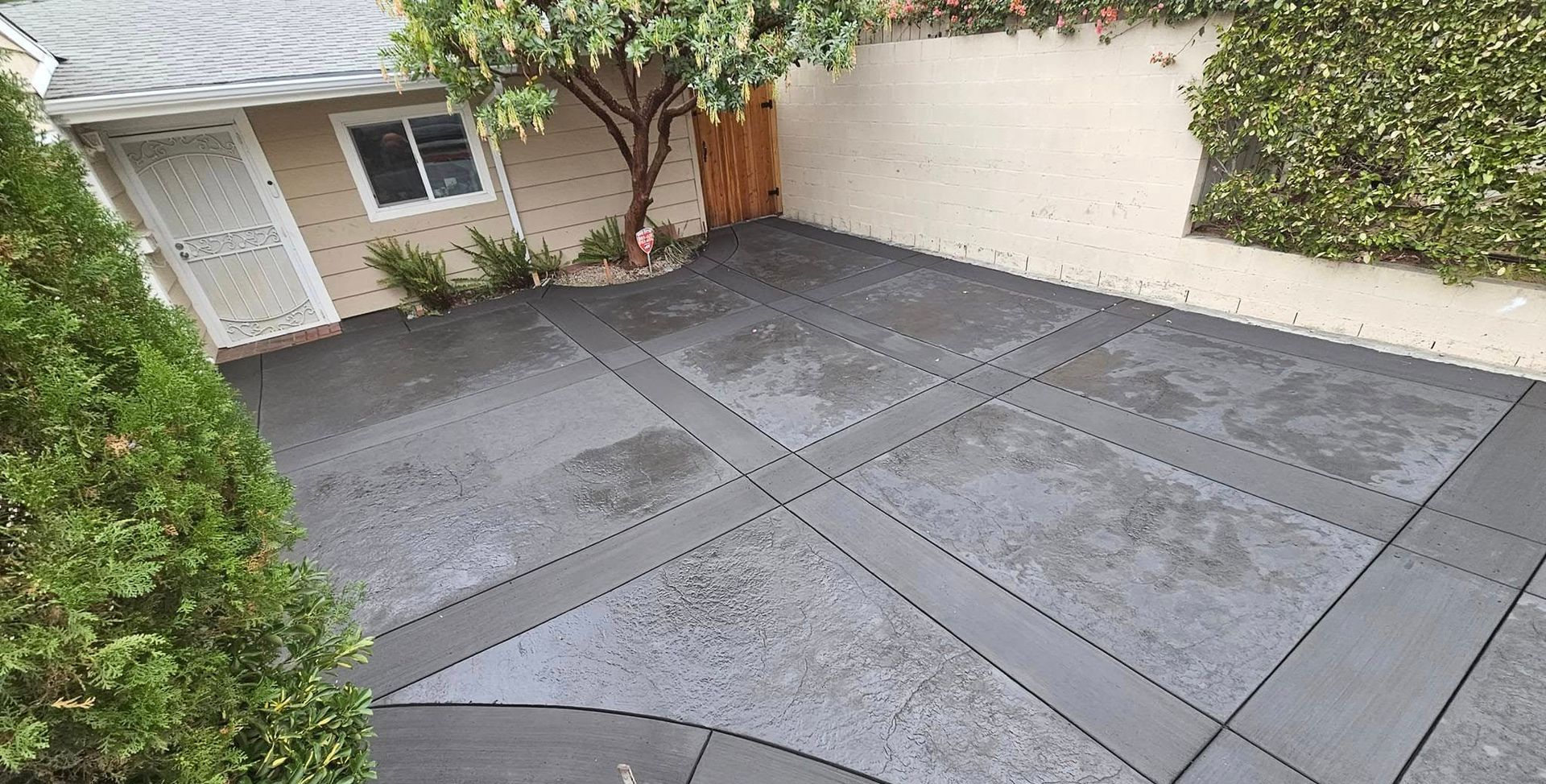
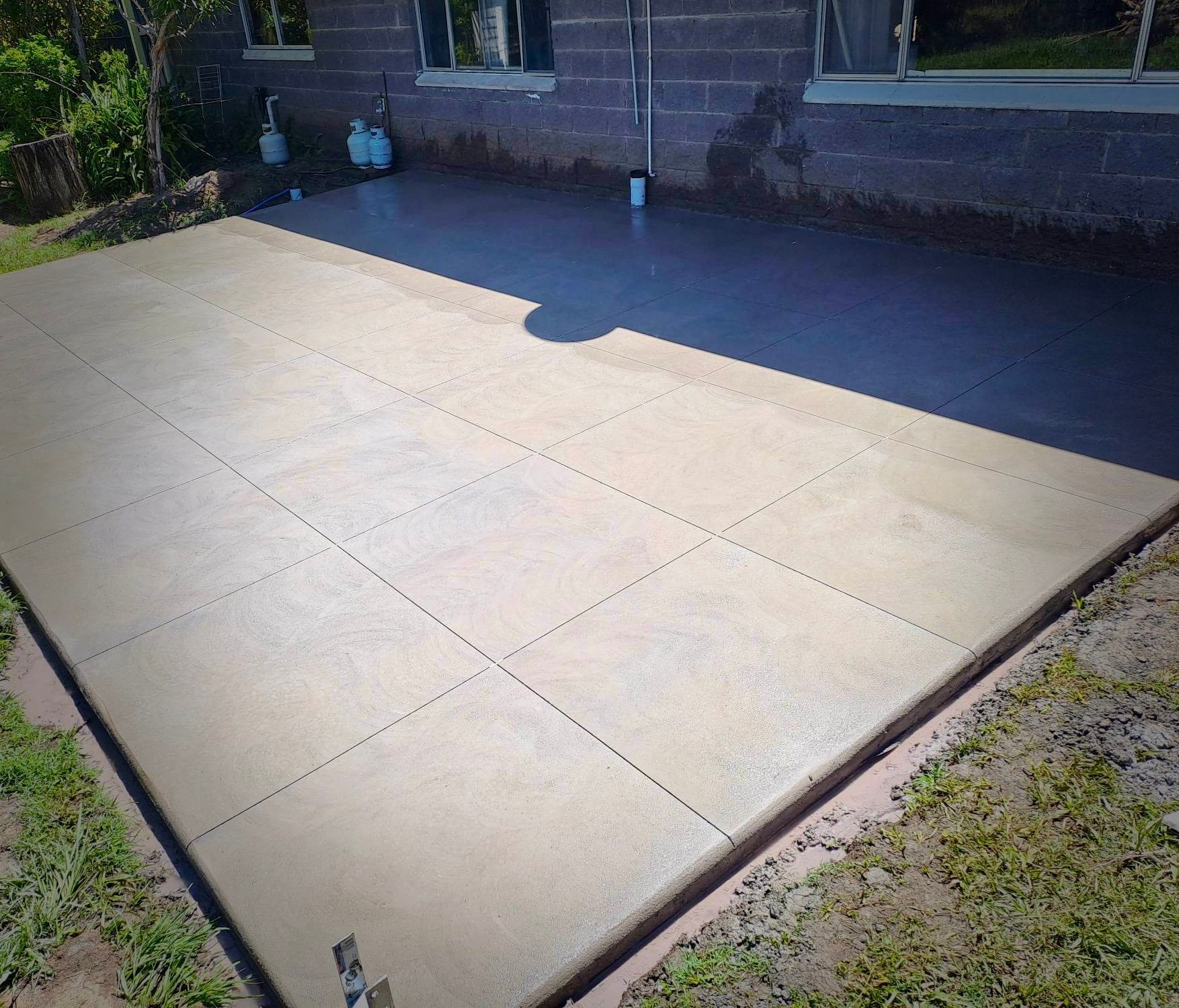
A diamond blade cuts a groove to one-quarter of the slab depth once the concrete can support the saw without raveling the edges. This method suits broom finishes, smooth driveways, and shop floors where narrow, sharp lines look best against the surrounding finish.
02
Hand-Tooled Joints
Grooving tools press joints into fresh concrete while it is still workable, leaving a rounded edge that pairs well with traditional walkways and older homes. Tooled joints go in during finishing, so there is no waiting on a saw window later that day.
03
Diamond and Grid Patterns
Turning the grid 45 degrees creates a diamond layout that reads like large-format tile across a patio or entry. Square grids work well on driveways and plazas. Either way, panels stay close to square so shrinkage stress spreads evenly across each section.
04
Radial and Curved Layouts
Circular patios, round courtyards, and curving garden paths call for joints that radiate from a center point or follow an arc. We plan these on paper first, then transfer the lines to the slab so each wedge stays within sound spacing limits.
05
Decorative Scoring
Shallow score lines add borders, faux tile, or custom geometric shapes without acting as crack-control joints. Scoring can frame a stamped field, outline a seating area, or echo the layout of nearby pavers, and it works on freshly poured or cured concrete.
06
Joint Sealing and Redesign
Open joints collect dirt, weeds, and water that can soften the base below. We clean out old joints, fill them with flexible sealant, and, where an existing layout looks random or cracks keep appearing, add new saw-cut lines to control future movement.
TESTIMONIALS
What Our Customers Say
Why Choose Us for Custom Concrete Joint Designs
Joints decide where your concrete cracks and how the finished surface looks for years to come, so the planning, timing, and cutting behind them deserve the same attention as the pour itself and the finish on top.
01
Layouts Drawn Before the Pour
Each joint plan starts on paper with slab dimensions, thickness, and the features around it. Mapping lines ahead of time lets us align them with doors, steps, and corners, and it shows you exactly how the finished grid will look before work begins.
02
Spacing Set by Slab Thickness
Thicker slabs can carry wider panels, while thinner ones need joints closer together. We space joints at 24 to 36 times the thickness, lean tighter on hot days or clay soil, and keep each panel no longer than 1.5 times its width.
03
Timing Matched to the Weather
Heat, wind, and mix design all change how quickly concrete gains strength. We check the slab throughout the day so saw cuts happen after the edges hold firm and before shrinkage stress builds enough to crack the panels on its own schedule.
04
Isolation at Walls and Posts
Where new concrete meets a foundation, a column, or a post, a full-depth isolation joint lets each element move independently. Skipping that step invites cracks radiating from the contact point, so we place a compressible filler strip before any concrete goes down.
05
Inside Corners Planned Carefully
Notches, like the spot where a patio wraps around a room addition, concentrate stress and tend to crack diagonally. Running a joint straight off each inside corner gives that stress a planned release instead of a jagged break across the panel.
06
Straight Answers About Cracks
Control joints guide cracking; they cannot promise a slab will never crack. We explain what joints do, what they cannot do, and how spacing, base prep, and curing work together, so your expectations match how concrete actually behaves over time.
WHO WE ARE
A Joint Line Is a Design Decision, Not an Afterthought
Our family-owned team sketches joint layouts before any forms are set, because the lines across a driveway or patio stay visible for as long as the slab lasts. As decorative specialists, we line joints up with doorways, steps, planters, and pattern borders so the grid looks intentional rather than accidental. You see the layout, ask questions, and approve it before any concrete arrives, and we keep to our timeline on residential and commercial work alike. Use our estimate request form to describe your slab and get started.
Why Choose INFINITE CONCRETE CREATIONS, INC.
Built On Trust & Craftsmanship
01
Quality Concrete Craftsmanship
We take pride in delivering durable, high-quality concrete work built with skilled craftsmanship and dependable materials. Every project is completed with long-term performance and appearance in mind.
02
Personalized Custom Designs
We tailor each project to the property and the client's vision, offering a wide variety of customizable colors, textures, patterns, and finishes. We can mix and match design elements to create concrete work that is truly unique.
03
Precision in Every Detail
We approach every project with careful planning and precise attention to detail, from preparation and forming to finishing and final cleanup. Our goal is a clean, professional result that reflects the quality of our work.
04
Experienced Certified Professionals
Our team brings extensive hands-on experience, specialized skills, and professional credentials to every project. We use proven techniques and industry knowledge to complete concrete projects safely, accurately, and professionally.
FAQs - Frequently Asked Questions
How far apart should control joints be in concrete?
Most slabs need joints spaced 24 to 36 times their thickness in inches, which means 8 to 12 feet between joints on a 4-inch slab. Hot weather, clay soils, and high-shrinkage mixes call for spacing toward the tighter end of that range.
How deep should control joints be cut?
Cut control joints at least one-quarter of the slab thickness, so a 4-inch slab gets a groove about 1 inch deep. Shallower cuts may not create a weak enough plane, and the slab can crack right beside the joint instead of inside it.
When should control joints be cut in new concrete?
Saw cuts usually happen within about 4 to 12 hours of finishing, once the edges stop raveling. At INFINITE CONCRETE CREATIONS, INC., we watch that window closely in San Fernando, CA, where summer heat can shorten it considerably on a July afternoon.
What is the difference between a control joint and an expansion joint?
An expansion joint, often called an isolation joint, separates concrete from walls, posts, or other slabs with a full-depth filler. Control joints are partial-depth grooves that create weakened planes, so shrinkage cracks form in a predictable line below the surface.
Do concrete control joints need to be sealed?
Filling them is optional in mild climates but helpful where joints collect dirt, weeds, or runoff. Flexible sealant keeps water from reaching the base, reduces debris packing, and gives a tidy look, though it cannot correct poor spacing or shallow cuts.
Can you add control joints to existing concrete?
Yes, new joints can be saw-cut into cured concrete to create a planned pattern or refresh a tired layout. They will not undo cracks that already exist, but they can guide future movement and blend older cracks into a more orderly design.
What decorative joint patterns work on a patio?
Diamond grids, square tile layouts, radial wedges, and bordered fields all suit a patio. INFINITE CONCRETE CREATIONS, INC. designs patio joint patterns in San Fernando, CA, that line up with doors, steps, and planters, so structure and style reinforce each other across the surface.
Why does concrete crack even with control joints?
Because joints only guide shrinkage cracking, cracks still appear when joints sit too far apart, are cut too shallow or too late, or when the base was poorly compacted. Inside corners, tree roots, and settling soil are other common causes worth checking first.
Clean Lines That Steer Every Crack Where It Belongs
Random cracks wandering across a new patio usually trace back to joints placed too far apart, cut too shallow, or cut too late. The right layout prevents that and adds a design element at the same time, from a classic square grid to a diamond field or radial pattern. INFINITE CONCRETE CREATIONS, INC. plans and cuts custom joint designs across San Fernando, CA, and neighboring communities for homes and businesses alike. Look over layout sketches with us, compare patterns side by side, and decide when it feels right. Whenever you are ready, send your slab details through our contact page, and we will reach out to schedule a conversation.